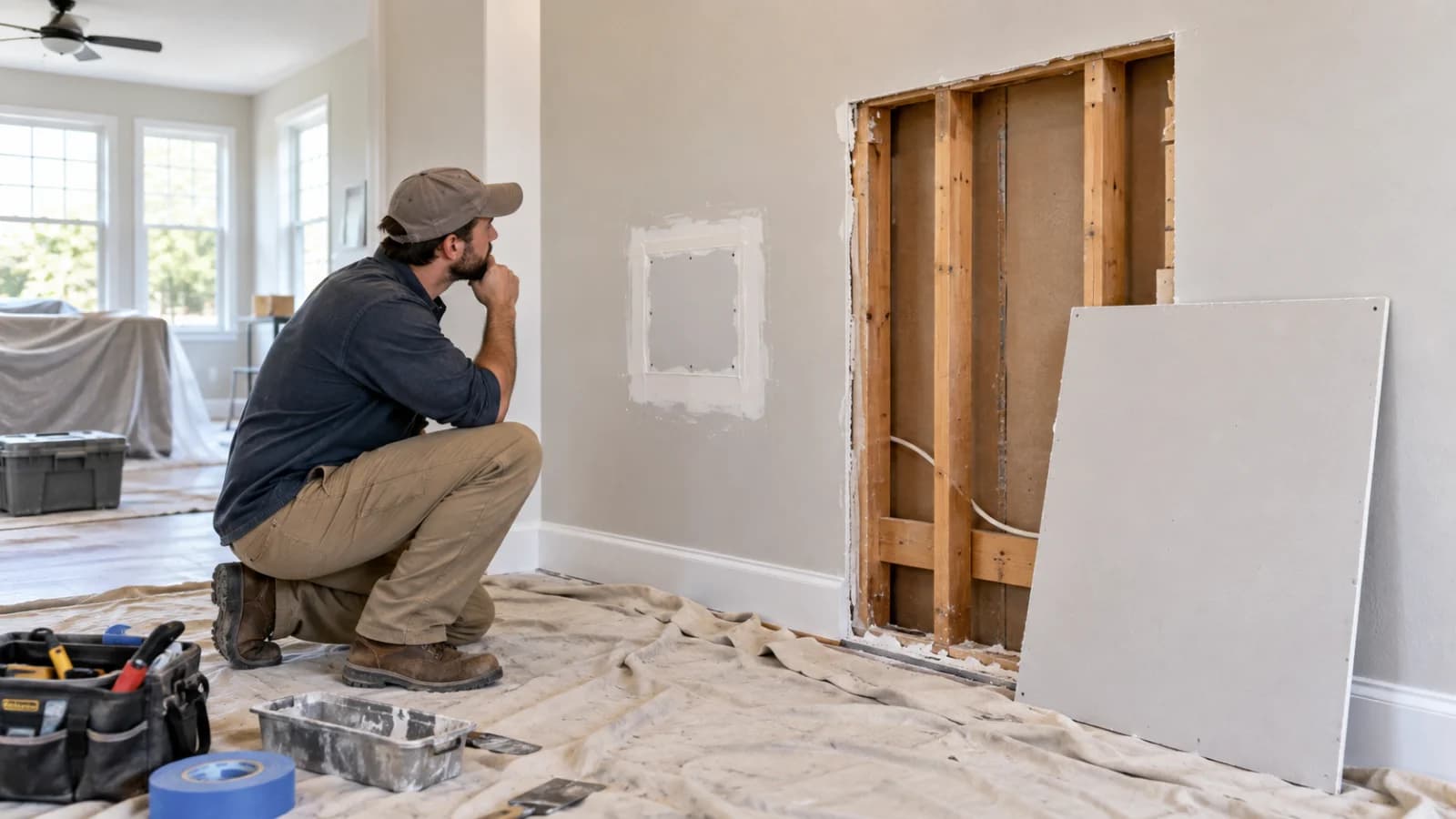
When drywall is damaged, the first question is usually whether it can be patched or whether the entire section needs to be replaced.
The answer depends on more than the visible size of the damage. A small hole in otherwise solid drywall is usually straightforward. A similar-looking area caused by an active leak, hidden moisture, or damaged framing may require a more involved repair.
Here is how a professional decides between drywall repair and replacement.
When drywall can usually be patched
Patching is generally appropriate when the surrounding drywall remains dry, solid, and securely attached.
Common examples include:
Nail pops and screw holes
Doorknob holes
Small dents and punctures
Limited plumbing or electrical access openings
Isolated cracks caused by normal settling
Minor areas of torn drywall paper
Small damaged sections surrounded by solid material
For small repairs, the damaged edges are cleaned up and backed or reinforced as needed. The patch is installed, taped, floated with joint compound, sanded, textured, primed, and painted.
The repair may be structurally simple, but the finishing work determines whether it disappears into the wall.
When replacement is the better choice
Replacement is usually recommended when the drywall has lost its strength or when patching would leave too much compromised material in place.
Warning signs include:
Drywall that feels soft, swollen, or crumbly
A ceiling that is sagging or bowing
Large areas of water damage
Repeated cracks that return after previous repairs
Extensive mold or contamination
Multiple repairs concentrated in one section
Damaged drywall around framing, plumbing, or electrical work
Loose panels or badly damaged seams
In these situations, the contractor removes the damaged material back to solid drywall and sound framing. A new panel or partial panel can then be installed and properly finished.
For larger renovations or areas where most of the existing board must come down, professional drywall installation may be more efficient than assembling numerous small patches.
Water damage changes the decision
Water-damaged drywall requires special attention because the visible stain may not show the full extent of the problem.
Before the wall or ceiling is closed, the source of the water must be found and corrected. That may involve plumbing, roofing, exterior sealing, or HVAC work.
Wet drywall should not simply be covered with joint compound and paint. If the material remains damp, soft, swollen, or contaminated, it generally needs to be removed. The surrounding area should be allowed to dry before new drywall is installed.
If mold is present, the situation may also require evaluation or remediation beyond normal drywall work.
Once the source is corrected and the area is dry, San Marcos Drywall & Paint can complete the necessary drywall repair, texture matching, priming, and painting.
How a professional evaluates the damage
A proper drywall assessment usually includes the following steps:
Identify the cause. A recurring crack, stain, or soft area needs an explanation before it is repaired.
Check the surrounding material. The contractor determines where damaged drywall ends and solid material begins.
Inspect the framing when necessary. Opening a damaged area may reveal loose backing, plumbing problems, insulation issues, or framing movement.
Choose the repair boundary. Replacement sections should extend to solid material and suitable framing so the new drywall can be secured properly.
Match the existing thickness and finish. Drywall comes in different thicknesses, and homes may have smooth, orange-peel, knockdown, or other textured finishes.
Plan the paint transition. Sometimes a small touch-up will blend. In other cases, repainting the entire wall or ceiling produces the best result.
Ceiling repairs deserve extra care
Ceiling drywall is affected by gravity, so sagging, loose tape, and water damage should not be treated like minor cosmetic wall defects.
A small, dry hole may be patchable. A soft, bowed, or heavily stained section often needs to be removed so the framing and surrounding material can be inspected.
Ceilings also make poor texture and paint matching more visible. Windows, ceiling lights, and natural daylight can highlight ridges and uneven repairs that might be less noticeable on a wall.
Texture and paint matching matter
A patch is not finished simply because the hole has been closed.
The repaired area must blend with the existing texture, primer, paint color, and sheen. Even the correct paint color can stand out if the surrounding wall has aged or if the sheen differs.
For the most consistent finish, the best approach may be to repaint from corner to corner. San Marcos Drywall & Paint can coordinate the repair with interior painting, avoiding the need to schedule separate contractors.
How much does drywall repair cost?
Cost depends on the size and location of the damage, access, drywall thickness, texture matching, and the amount of painting required.
A small wall patch costs less than replacing part of a high ceiling, but several small repairs throughout a home can require more setup and finishing time than one larger opening.
For practical local price ranges, see our guide to drywall repair costs in Central Texas.
Should you repair drywall yourself?
A homeowner with the right tools may be able to handle a small hole in a smooth wall. Larger repairs become more difficult when they involve ceilings, water damage, electrical or plumbing openings, old texture, or paint that must blend perfectly.
If the cause is unclear or the drywall feels soft, continues cracking, or shows signs of moisture, it is worth having the area evaluated before covering it.
San Marcos Drywall & Paint serves San Marcos and surrounding Central Texas communities with drywall repair, replacement, texture matching, and painting.
Request an estimate and send us a photo of the damaged area to get started.