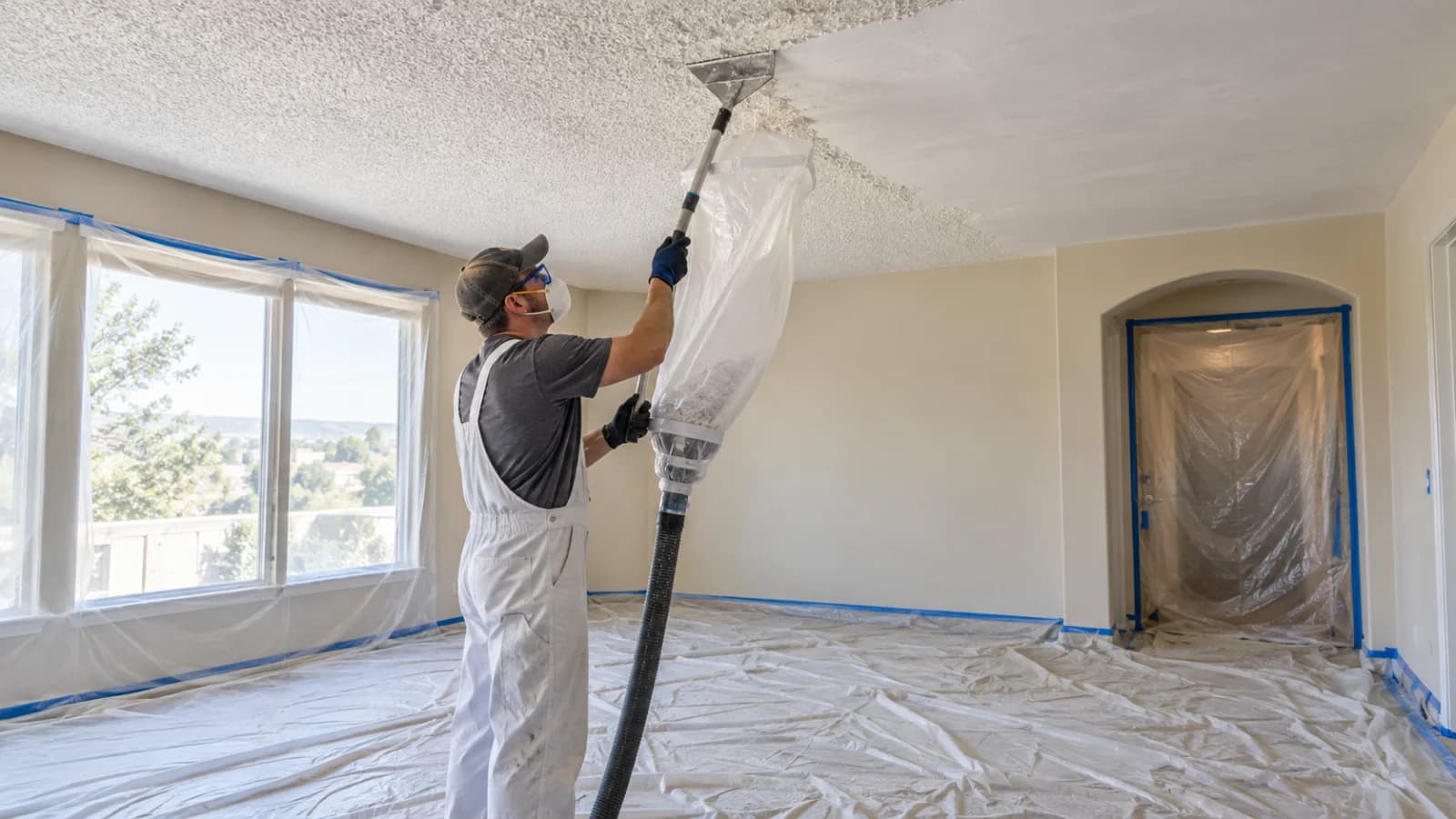
Popcorn ceilings were common in homes for decades, but many San Marcos homeowners are ready for a cleaner, brighter, more modern finish. Removing the texture can update an entire room. The catch is that the work involves more than simply scraping the ceiling.
A professional result depends on preparation, knowing what is under the texture, repairing the surface, and finishing it so the ceiling looks smooth after the paint dries. Here is what to expect before you start.
Start by identifying what is on the ceiling
Before disturbing an older ceiling, find out when the texture was installed and whether it has been painted. Some older ceiling materials can contain asbestos. You cannot confirm that by looking at the texture, so testing by a qualified professional may be appropriate before work begins. If testing is recommended, do not scrape or sand the material until it has been cleared.
Painted popcorn texture creates a different challenge. Water may not soften it the way it softens an unpainted ceiling, so the contractor may need to dry-scrape, skim-coat, or use a combination of methods.
What professional popcorn ceiling removal involves
The exact process depends on the condition of the ceiling, but most projects follow the same basic sequence:
Protect the room. Furniture is removed or covered, and floors, walls, windows, doors, and fixtures are protected. Good containment keeps dust and wet texture from traveling through the home.
Test a small area. The contractor checks how easily the texture releases and whether the drywall paper underneath is sound.
Remove the texture. The ceiling may be lightly misted and scraped in sections. Painted or stubborn texture may require a different approach.
Repair the drywall. Nail pops, torn paper, uneven joints, cracks, and previous patches become much easier to see once the texture is gone. These areas must be repaired before the finish coat.
Skim and sand. A thin skim coat creates a consistent surface. After it dries, the ceiling is sanded and inspected under strong light.
Prime and paint. Primer seals the repaired surface and helps the finish paint look even. Many homeowners pair removal with professional interior painting so the ceiling and walls feel like one finished project.
How long does removal take?
A single uncomplicated room may take one to three working days, including drying time between repair, primer, and paint. High ceilings, multiple rooms, painted texture, water damage, or extensive surface repair can extend the schedule.
Drying time matters. Rushing joint compound or primer can leave visible seams, flashing, or texture differences after the final coat.
What affects the cost?
Square footage is only one part of the estimate. Contractors also consider:
Whether the texture has been painted
Ceiling height, stairwells, and difficult access
The amount of drywall repair required after scraping
Furniture and fixture protection
The desired finish: smooth, light texture, or another finish
Whether primer and ceiling paint are included
If the ceiling has cracks, stains, loose tape, or soft areas, it may need drywall repair before it can be painted. A photo and room dimensions are often enough to start a useful estimate, but an on-site look produces the most reliable scope.
Can you remove a popcorn ceiling yourself?
For a small, tested, unpainted area, a careful homeowner may be able to remove the texture. The difficult part is usually everything around the scraping: protecting the room, avoiding torn drywall paper, correcting joints and nail pops, sanding without waves, and producing a uniform finish.
Ceilings are unforgiving because daylight and overhead lighting reveal every ridge and patch. If the texture is painted, the ceiling is high, the drywall is damaged, or you want a smooth Level 5-style appearance, hiring a professional can save substantial cleanup and rework.
What should the finished ceiling look like?
After removal, the ceiling should look consistent from wall to wall, without scrape marks, fuzzy drywall paper, visible seams, or mismatched patches. Primer should cover the full surface, not only the repaired spots, and the final paint should have an even sheen.
If you are planning removal in San Marcos, Kyle, Buda, New Braunfels, or a nearby Central Texas community, San Marcos Drywall & Paint can evaluate the texture, explain the safest approach, and provide a clear scope for removal, repair, and painting. Request an estimate or review our frequently asked questions before scheduling.